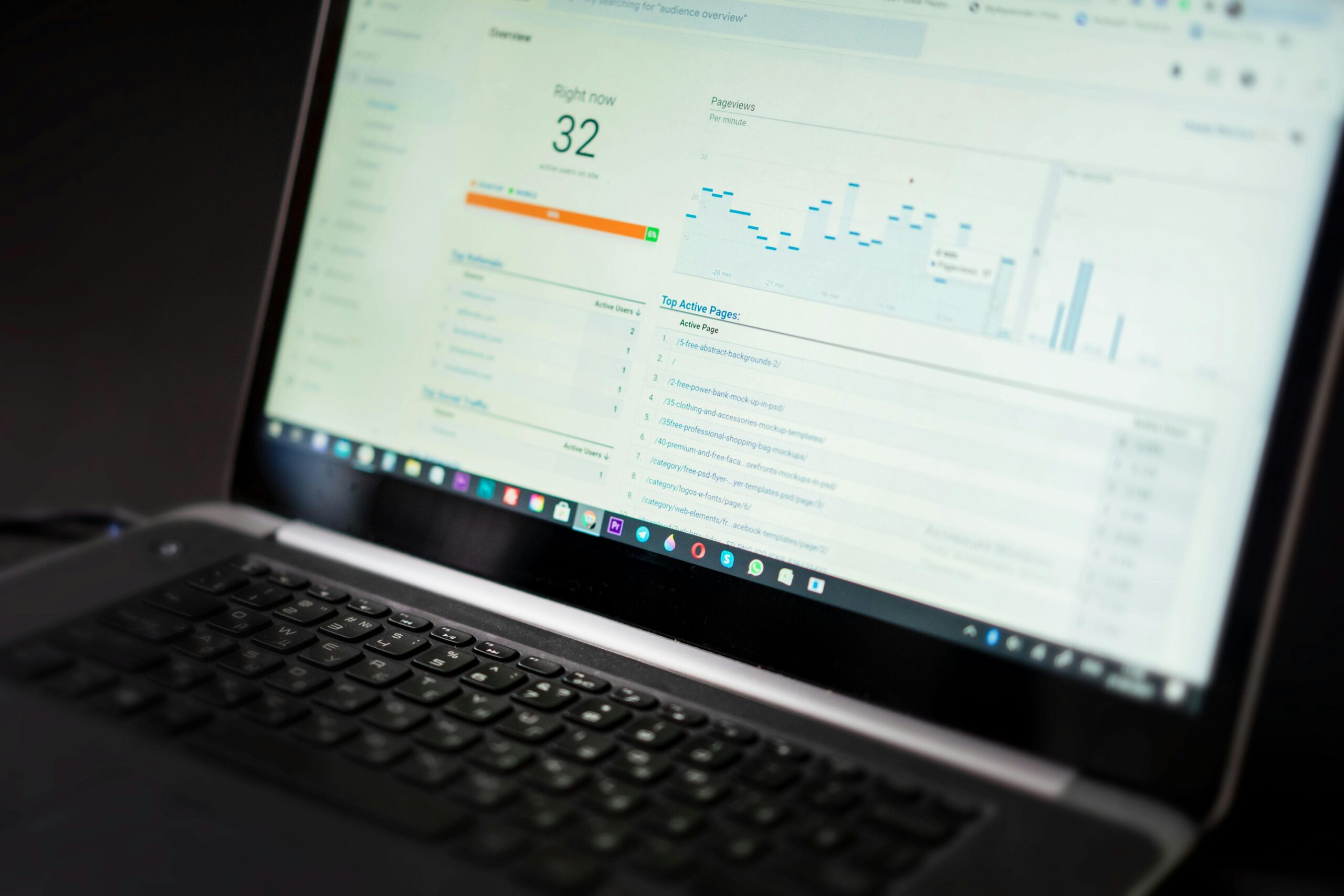
Machine learning systems demand constant vigilance to maintain their effectiveness. Setting intelligent alert thresholds is crucial for catching performance degradation before it impacts your business outcomes.

🎯 Understanding the Critical Nature of ML Performance Monitoring
Machine learning models are living systems that interact with constantly evolving data environments. Unlike traditional software where bugs are typically static and reproducible, ML systems can silently degrade over time without any code changes. This phenomenon, known as model drift, occurs when the statistical properties of the target variable change, or when the relationship between features and targets evolves.
The challenge intensifies because performance drops don’t always announce themselves dramatically. A model that was achieving 95% accuracy might slip to 93%, then 91%, gradually enough that without proper alerts, the decline goes unnoticed until significant business impact accumulates. This gradual deterioration makes smart threshold setting not just beneficial, but essential for maintaining ML system reliability.
Organizations that fail to implement robust alerting systems often discover problems only after customer complaints escalate or revenue metrics show concerning trends. By that point, the damage to user experience and business outcomes may already be substantial, requiring emergency interventions that could have been avoided with proactive monitoring.
📊 Identifying Key Performance Metrics Worth Monitoring
Before establishing thresholds, you must determine which metrics genuinely reflect your model’s health and business impact. Not all metrics deserve equal attention, and monitoring everything creates alert fatigue that diminishes response effectiveness.
Primary Performance Indicators
For classification tasks, accuracy alone rarely tells the complete story. Precision and recall reveal different aspects of model behavior, particularly important when class imbalance exists or when false positives and false negatives carry different business costs. F1 scores provide balanced views, while AUC-ROC curves offer threshold-independent performance assessments.
Regression models require different metrics entirely. Mean Absolute Error (MAE) and Root Mean Squared Error (RMSE) each highlight different error characteristics, with RMSE penalizing larger errors more heavily. R-squared values indicate how much variance your model explains, though they can be misleading with non-linear relationships or when extrapolating beyond training data ranges.
Operational and Data Quality Metrics
Beyond model-specific performance, operational metrics provide early warning signals. Prediction latency might indicate infrastructure problems or data pipeline bottlenecks. Request volume patterns help distinguish between model degradation and shifts in user behavior or traffic patterns that require different responses.
Data quality metrics deserve dedicated attention because garbage in reliably produces garbage out. Missing value rates, feature distribution shifts, and out-of-range values often precede noticeable performance drops. Monitoring these upstream indicators enables proactive responses before model outputs degrade significantly.
🔧 Establishing Baseline Performance Benchmarks
Effective thresholds require solid understanding of normal operating ranges. Without proper baselines, you’ll either trigger false alarms constantly or miss genuine issues until they become crises.
Begin by collecting comprehensive performance data across various conditions. Your model likely performs differently on weekdays versus weekends, during promotional campaigns versus normal periods, or across different geographic regions or user segments. Understanding this natural variability prevents mistaking expected fluctuations for genuine problems.
Statistical approaches like calculating mean performance with standard deviations provide quantitative baselines. However, simple averages can mislead when performance distributions aren’t normal. Consider using percentile-based approaches where you track the 5th, 25th, 50th, 75th, and 95th percentiles of your metrics. This approach proves more robust to outliers and reveals performance distribution shapes.
Time-based patterns matter enormously. Many ML systems exhibit weekly, daily, or even hourly cycles. A recommendation system might show different performance characteristics during morning commutes versus evening browsing sessions. Seasonal businesses face even more pronounced variations. Your baseline calculations should account for these temporal patterns rather than treating all time periods equivalently.
⚖️ Determining Appropriate Threshold Sensitivity Levels
The art of threshold setting balances two competing risks: missing important issues versus triggering excessive false alarms. Too sensitive, and your team drowns in alerts, leading to fatigue and ignored warnings. Too lenient, and problems escalate undetected until they cause serious damage.
Business Impact-Driven Threshold Design
Your thresholds should reflect the actual business consequences of performance drops. A fraud detection model where false negatives cost millions demands extremely tight thresholds with immediate alerting. A content recommendation system might tolerate more variation before requiring intervention.
Quantify the business impact at different performance levels. If your model’s accuracy drops from 95% to 93%, what does that mean in revenue terms, customer satisfaction scores, or operational costs? This analysis helps justify threshold choices and prioritize alert responses appropriately.
Multi-Tier Alert Systems
Implementing tiered alerting proves more effective than binary approaches. Consider establishing three threshold levels:
- Warning level: Performance drops below expected ranges but remains within acceptable bounds. These generate notifications for awareness without requiring immediate action, useful for tracking trends.
- Attention level: Performance degradation that warrants investigation and likely intervention within hours. These indicate problems developing that will worsen without response.
- Critical level: Severe performance drops requiring immediate response. These thresholds trigger escalation protocols and emergency procedures.
This tiered approach prevents alert fatigue while ensuring serious issues receive appropriate urgency. It also provides natural escalation paths when problems persist or worsen.
📈 Incorporating Statistical Confidence into Alert Logic
Single data points rarely tell reliable stories. A model might show temporarily degraded performance due to random variation, unusual but legitimate data samples, or temporary infrastructure hiccups. Building statistical confidence into your alerting logic reduces false positives while maintaining sensitivity to genuine problems.
Moving averages smooth out random fluctuations, revealing underlying trends. Instead of alerting on instantaneous metric drops, calculate performance over rolling windows—perhaps hourly, daily, or weekly depending on your prediction volume and business context. This approach filters noise while remaining responsive to sustained changes.
Confidence intervals provide mathematical rigor to threshold decisions. If your baseline performance sits at 94% accuracy with a 95% confidence interval of ±1.5%, you might set warning thresholds at 92.5% and critical alerts at 90%. This statistical foundation makes threshold choices defensible and adjustable as you collect more data.
Consider implementing sequential testing approaches borrowed from A/B testing methodologies. These techniques allow you to detect changes as early as possible while controlling false positive rates mathematically. Sequential Probability Ratio Tests (SPRT) can identify performance shifts with minimal data while maintaining specified error rates.
🌊 Addressing Concept Drift and Data Distribution Shifts
Model performance rarely degrades uniformly across all input conditions. Concept drift and data distribution shifts create complex patterns where overall metrics might appear stable while specific segments suffer significant degradation.
Implement segmented monitoring that tracks performance across important data slices. Geographic regions, user demographics, product categories, or time periods might each show different drift patterns. A model might maintain strong average performance while completely failing on a growing user segment or emerging product category.
Distribution comparison techniques help detect drift before performance metrics decline noticeably. Kolmogorov-Smirnov tests, Population Stability Index (PSI), or more sophisticated approaches like Maximum Mean Discrepancy can identify when incoming data distributions diverge from training data characteristics. These serve as leading indicators, triggering alerts before prediction quality suffers.
Adaptive thresholds that evolve with your data prove particularly valuable in dynamic environments. Instead of static baselines, implement systems that continuously update expected performance ranges based on recent history. This approach naturally accommodates legitimate changes in your operating environment while still flagging anomalous degradation.
🔍 Implementing Effective Alert Response Workflows
Alerts achieve nothing without appropriate response mechanisms. The most sophisticated threshold system fails if triggered alerts disappear into inbox black holes or generate confusion about responsibilities and next steps.
Define clear ownership and escalation paths before alerts start firing. Who receives different alert types? What actions should each alert level trigger? How long before escalation occurs if initial responders don’t acknowledge or resolve issues? Document these procedures explicitly and ensure all stakeholders understand their roles.
Automated diagnostic information makes response faster and more effective. When alerts trigger, automatically capture relevant context: recent prediction distributions, feature statistics, system performance metrics, and comparison against baseline periods. This information helps responders quickly determine whether issues stem from model degradation, data problems, infrastructure issues, or legitimate environmental changes.
Implement feedback loops that improve your alerting system over time. Track alert outcomes: was the alert actionable, false positive, or missed problem? Use this data to refine thresholds, adjust sensitivity, or modify which metrics receive monitoring priority. Continuous improvement transforms initial threshold guesses into battle-tested configurations.
🛠️ Technical Implementation Strategies and Tools
Translating threshold strategies into operational monitoring requires appropriate technical infrastructure. Modern ML operations platforms provide various capabilities, but understanding core implementation principles helps regardless of specific tooling.
Time-series databases excel at storing and querying the continuous metric streams ML monitoring generates. Systems like Prometheus, InfluxDB, or time-series-optimized cloud services handle high-volume metric ingestion while supporting the aggregation queries alerting logic requires. Design your data schemas to enable efficient segmented analysis across relevant dimensions.
Alert managers separate notification routing from metric collection and threshold evaluation. This architectural separation allows you to modify alert destinations, timing, and grouping without touching monitoring logic. Tools like Alertmanager, PagerDuty, or OpsGenie provide sophisticated routing, suppression, and escalation capabilities that prevent alert storms while ensuring critical issues reach appropriate responders.
Visualization dashboards complement automated alerts by enabling proactive exploration and pattern recognition. Grafana, Kibana, or custom solutions built on Plotly or D3.js help teams spot emerging trends before they cross alert thresholds. Effective dashboards balance comprehensiveness with clarity, highlighting the most important metrics without overwhelming viewers.
Consider leveraging specialized ML monitoring platforms that provide purpose-built capabilities for model performance tracking. These systems understand ML-specific concepts like prediction drift, feature importance changes, and model fairness metrics. While they require investment, they significantly reduce implementation effort for comprehensive monitoring.
📝 Balancing Automation with Human Judgment
Automated alerts handle the impossible-for-humans task of continuous monitoring at scale, but human judgment remains irreplaceable for interpreting context and making nuanced decisions. The most effective systems combine both strengths appropriately.
Not every alert requires immediate automated action. Some situations benefit from human assessment before intervention: when performance drops coincide with known events like product launches, when multiple competing explanations exist, or when changes affect sensitive systems where incorrect responses carry high costs. Build in decision points where humans can approve or modify automated responses.
Contextual information that humans naturally incorporate often escapes automated systems. Are you running a marketing campaign that attracts different user populations? Did a competitor launch a new product? Has media coverage shifted customer expectations? These external factors might explain performance changes without indicating model problems requiring technical fixes.
Create feedback mechanisms where human responders can annotate alerts with explanations and outcomes. This accumulated institutional knowledge improves both automated systems and human responses over time. Patterns that initially require investigation become recognizable through accumulated experience.
🎓 Learning from Alert History to Improve Systems
Every alert represents a learning opportunity. Organizations that systematically analyze alert patterns continuously improve both their ML systems and monitoring infrastructure.
Maintain comprehensive alert logs including not just when alerts fired but what investigations revealed, what actions were taken, and what outcomes resulted. This historical record becomes invaluable for training new team members, refining threshold settings, and identifying recurring patterns that might indicate systematic issues rather than isolated incidents.
Regularly review false positive rates across different alert types and threshold levels. High false positive rates indicate thresholds set too sensitively or monitoring metrics that don’t reliably predict meaningful problems. Conversely, incidents discovered through channels other than alerts suggest monitoring gaps or insufficiently sensitive thresholds.
Analyze the lead time your alerts provide before business impact becomes significant. Do warnings give enough time for effective response? Do critical alerts fire early enough to prevent damage? This temporal analysis helps optimize threshold spacing across your tiered alert levels.
🚀 Evolving Your Threshold Strategy as Systems Mature
Initial threshold configurations represent educated guesses based on limited operational experience. As your ML system matures and accumulates production history, your alerting strategy should evolve accordingly.
Early deployments often start with conservative thresholds—more false positives accepted in exchange for ensuring no serious issues slip through. As teams gain confidence and understand normal variation better, thresholds can become more precisely tuned, reducing alert fatigue while maintaining protection against genuine problems.
Expanding monitoring scope follows natural progression. Initial deployments might monitor only overall performance metrics. Mature systems add segmented monitoring, upstream data quality checks, fairness metrics, and operational indicators. This expansion occurs gradually as teams develop capacity to respond effectively to additional alert streams.
Periodic threshold reviews should become standard practice. Quarterly or semi-annual reviews examine whether current thresholds still reflect appropriate sensitivity given accumulated experience. Model retraining, infrastructure changes, or business environment shifts might warrant threshold adjustments even when the monitoring system itself hasn’t changed.

💡 Maximizing Long-Term ML System Reliability
Smart alert thresholds form just one component of comprehensive ML system reliability, but they serve as a critical early-warning system that enables proactive management rather than reactive crisis response. Organizations that invest in thoughtful threshold design and continuous refinement build ML systems that maintain performance reliably over time.
The key insight remains that perfect thresholds don’t exist—only thresholds appropriate for your specific context, risk tolerance, and operational capacity. Start with reasonable initial configurations based on the principles outlined here, then commit to systematic improvement through careful observation, measurement, and adjustment.
Remember that the goal isn’t eliminating all alerts or catching every infinitesimal performance fluctuation. The goal is building sustainable systems that detect meaningful problems early enough for effective intervention while respecting the limited attention capacity of human responders. Finding that balance transforms ML monitoring from a source of stress into a source of confidence that your systems remain healthy and effective.
Success comes from treating alert threshold design as an ongoing practice rather than a one-time configuration task. The most reliable ML systems emerge from organizations that continuously learn from operational experience, adapting their monitoring approaches as both their systems and understanding evolve. This commitment to continuous improvement, more than any specific threshold value, ultimately determines long-term ML success.